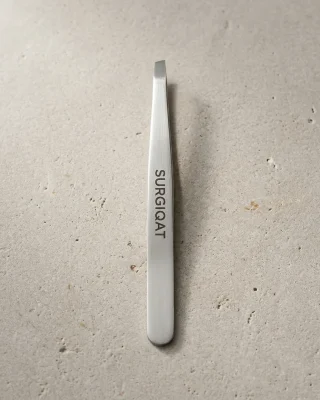
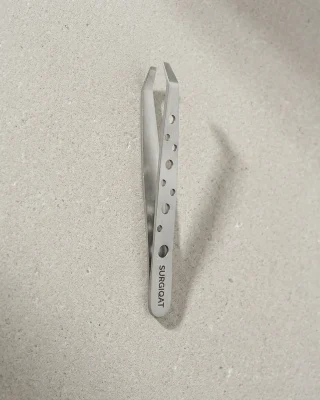
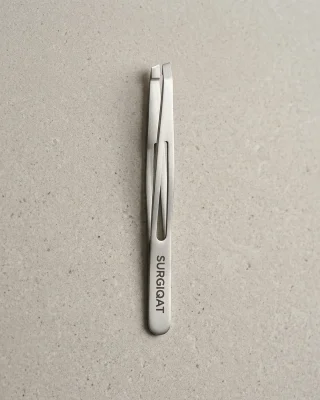
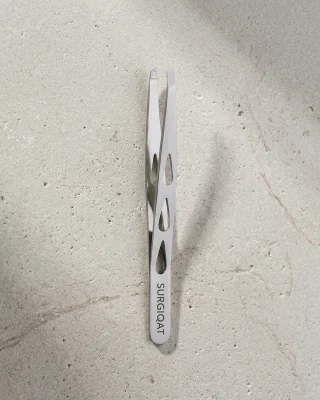
Why Buyers Replace Poorly Finished Square Tip Tweezers
When beauty retailers or esthetics supply houses source square tip tweezers from high-speed stamping factories, the most frequent complaint is uneven edge contact. Because a flat jaw is wider than a slanted or pointed tip, even a slight bow or twist along the horizontal edge leaves the center open while only the outer corners touch. When a technician tries to pull a cluster of coarse brow hairs or position a strip lash, the center slips right off.
Real-world feedback from salon professionals and repeat retail shoppers highlights four recurring flaws in sub-par flat tweezers:
Corner-Only Pinching: If the outer corners meet before the center span, the tool pinches skin at the edges while letting thick hairs slide straight through the middle gap.
Over-Thick Chunky Jaws: Heavy, un-tapered square tips block the user's view of the hair root and push flat against the skin instead of sliding neatly underneath short regrowth.
Harsh, Unrelieved Outer Corners: Sharp 90-degree outer edges that skip final hand buffing can nick or scratch sensitive eyelid and brow-bone skin during fast salon cleanups.
Stiff Arm Tension and Coating Peel: Rigid spring spines cause hand fatigue during busy salon shifts, while low-grade paint finishes bubble or flake off after routine soaking in EPA-registered disinfectants.
Choosing a manufacturing partner that combines surgical grade steel with hand-finished jaw geometry eliminates these return drivers before your products ever reach retail shelves or salon trolleys.
Knowing When Flat Tips Excel—and When to Pair Another Geometry
Understanding clinical and practical limits helps wholesale buyers curate smarter multi-tool kits. For example, a dermatological procedure report in the National Library of Medicine (PMC5443229) notes that flat-tip tweezers face gripping challenges on tiny, deeply anchored shafts compared with ultra-fine tips. That is exactly why experienced distributors position flat tip tweezers for coarse brow cleanup, fast multi-hair removal, and strip-lash or cosmetic-accent placement—while bundling them alongside pointed or slant geometries in full grooming sets so end users always have the right edge for every job.