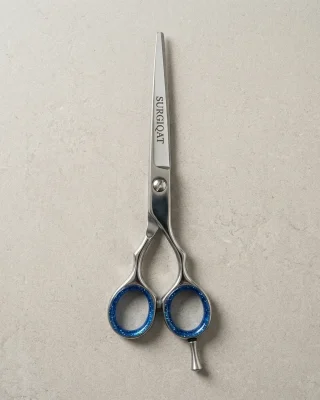
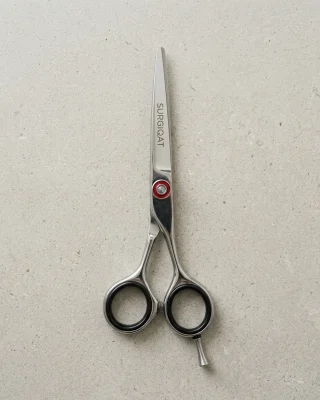
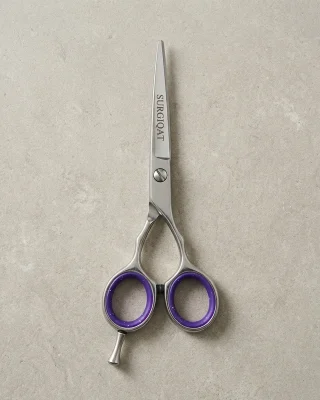
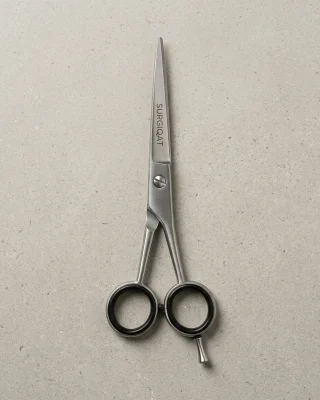
Fact 1: Barber Schools and Traditionalists Keep Demand Remarkably Steady
Many new private-label brands make the same catalog mistake: they build an entire lineup of offset and swivel models and drop straight handles completely. Six months later, a local barber academy or regional salon wholesaler asks for 200 starter pairs—and the brand has nothing to quote.
Classic opposing-grip shears hold two stubbornly loyal buyer groups. The first is education and licensing. State barbering exams still put traditional shear control front and center. For example, the New York State Department of State Barber Practical Examination Supply List explicitly requires exam candidates to bring cutting shears—even two pairs when demonstrating freehand techniques on coarse hair. Schools and student kit suppliers routinely order classic handles because the symmetrical shape is straightforward to teach and easy to budget across large classes.
The second group is experienced traditional barbers. Stylists trained to hold shears with the middle finger and thumb—or barbers who constantly flip their scissor blade over for deep point cutting and rapid comb transitions—find asymmetrical handles restrictive. Keeping two or three well-spec'd classic SKUs in your catalog captures both academy contracts and old-school shop reorders without diluting your ergonomic line.