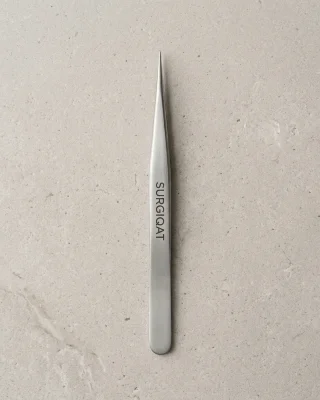
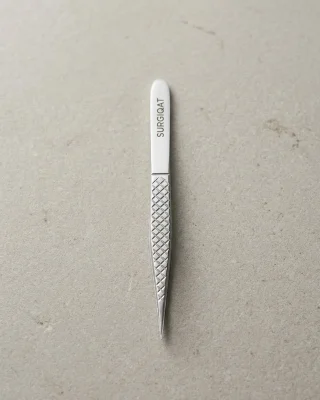
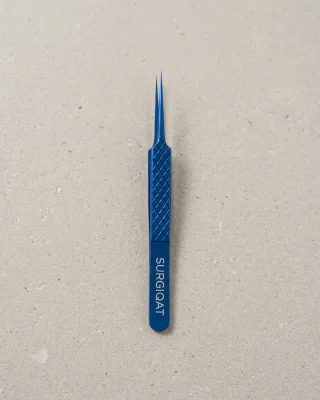
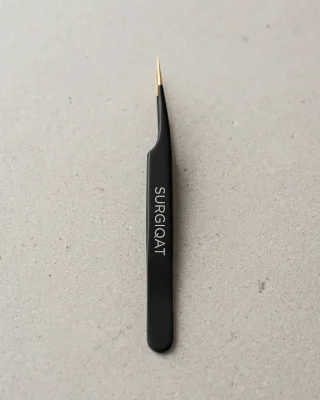
Why Precision Buyers Struggle with Low-Quality Needle Nose Tweezers
Buyers sourcing needle nose tweezers at wholesale quickly discover that sharp-looking product photos rarely tell the full story. Because the contact zone on a pointed tweezer narrows down to a fraction of a millimeter, even a tiny manufacturing error makes the tool unusable. If one arm sits a hair higher than the other—or if the two needle points cross over like miniature scissors when squeezed—the tweezer cannot hold a fine strand or splinter.
In community feedback from estheticians and everyday buyers, three defects account for the vast majority of returns on pointed tools:
Crossed or Hooked Points: Poorly aligned arms twist sideways under fingertip pressure, causing the very tips to scissor past each other instead of meeting squarely.
Blunt or Over-Thickened Tips: Mass-stamped blanks that skip careful taper grinding leave chunky rounded ends that push a tiny embedded hair deeper rather than sliding cleanly beside it.
Fragile, Soft Metal Tips: Low-grade alloys bend permanently the moment a technician accidentally taps the tips against a ceramic tray or drops the tool onto a tiled salon floor.
For B2B brands and distributors, these defects translate directly into high return rates, negative marketplace reviews, and lost salon accounts. Solving them requires surgical grade steel combined with controlled taper grinding and strict manual verification on every individual unit.
Where Pointed Geometries Outperform Standard Brow Shapes
While diagonal tweezers excel at broad shaping across the brow arch, needle-fine tips give the user an unobstructed line of sight directly onto a single hair shaft, facial stubble point, or foreign splinter. Estheticians also rely on fine pointed profiles to isolate delicate strands during detailed facial work, remove tiny stubborn hairs missed after waxing, and handle fine lash or nail art accents with pinpoint accuracy.